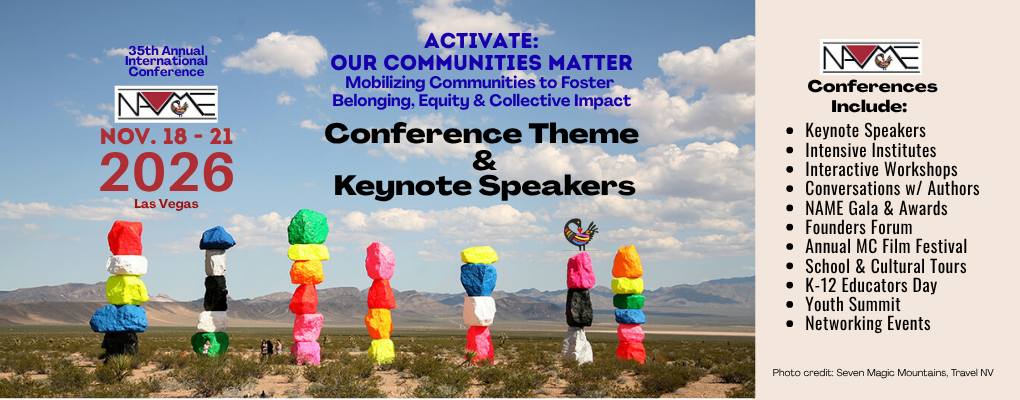
2026 National Association for Multicultural Education Annual Conference
November 18 – 21, 2026 • Las Vegas, Nevada
Theme:
Activate: Our Communities Matter
Mobilizing Communities to Foster Belonging, Equity & Collective Impact
In the current sociopolitical climate, communities of color and historically marginalized groups continue to face persistent educational inequities and systemic obstacles. At the same time, long-standing traditions of community resilience, activism, collaboration, and scholarship show tremendous promise. This conference aims to center the ideas, practices, and frameworks that help us understand how communities can mobilize for justice, care, and transformational change.
Why Las Vegas, and Why This Work NOW!
Las Vegas serves as a dynamic and timely backdrop for the 2026 NAME Annual Conference. As one of the most racially, culturally, and linguistically diverse cities in the United States, Las Vegas reflects the complexities, challenges, and possibilities at the heart of multicultural education today. Clark County is home to one of the nation’s largest school districts, where students represent more than 150 languages and come from richly varied cultural and migrant worker experiences. These demographic realities create a lived experience in which questions of community belonging, culturally sustaining pedagogy, and equity-centered educational leadership are daily necessities.
At the same time, Nevada has been a focal point for ongoing policy debates about schooling, community engagement, educational equity, and the rights of diverse learners. Las Vegas offers an instructive and urgent landscape for examining how communities mobilize for justice and opportunity amid shifting social and political climates. The city also embodies profound contrasts, including rapid economic growth alongside economic precarity, global tourism beside local displacement, and vibrant cultural expression next to persistent inequities. Together, these tensions provide fertile ground for exploring community-based solutions that honor lived experiences and advance collective impact.
Hosting the conference in Las Vegas allows NAME to highlight and learn from community organizations, educators, activists, and cultural leaders who are already working to build inclusive, affirming, and culturally grounded educational environments. It provides a meaningful space to consider how multicultural education can respond to demographic change, support multilingual learners, challenge systemic inequity, and identify pathways for community empowerment.
This moment calls for renewed commitment to multicultural education. Across the country, communities are grappling with polarization, curriculum restrictions, inequities in school funding, and attacks on inclusive educational practices. Yet communities continue to demonstrate resilience, solidarity, and innovation. By convening in Las Vegas, NAME affirms that this work is both necessary and urgent, and that communities must be activated as partners in creating belonging, equity, and shared impact.
Grounding the Theme in Community-Based Scholarship
The conference theme aligns with a broad body of community-engaged scholarship in education. Scholars such as Gloria Ladson-Billings have emphasized culturally relevant pedagogy that affirms students’ lived experiences. Jeff Duncan-Andrade explores how schools can respond to the hopes, assets, and social realities of young people in urban environments. Shirley Brice Heath documents how literacy and learning practices develop within community spaces, including families, neighborhoods, and cultural centers. Eve Tuck highlights healing, sovereignty, and community-centered research that resists extractive practices. Michelle Fine and the Participatory Action Research Collective show how youth and community-led research challenges inequity and creates pathways to transformation. Tara J. Yosso’s framework of community cultural wealth illuminates the strengths, brilliance, and navigational resources that marginalized communities possess.